Finding Your Next Customer Segment in Charlotte
Where to look for new customers when your business is growing
Every growing business reaches a point where the first wave of customers has been served and the next group is not as obvious. The question becomes: where do you find people who need what you offer but have not yet heard of you? The answer often lies in shifting the way you look at your market. Instead of guessing, you can use data to spot demand, study the competitive landscape, and identify opportunity gaps that your current approach has missed.
The most direct answer for a business in Charlotte is to start with local market research. Look at search trends in and around the city, examine what competitors are doing, and ask what needs are not being met. A practical way to do this is by using market intelligence software that surfaces real-time signals about who is searching for what, where the demand is highest, and which segments are underserved. This approach turns a vague question into a concrete plan.
Start with your existing audience insights
Your current customers hold clues about your next segment. Look at who buys from you, what problems they bring, and how they found you. Are they concentrated in a particular neighborhood, age group, or industry? If you serve HVAC businesses in Charlotte, for example, you might notice that most of your customers are in the northern part of the city. That could mean there is an opportunity gap in the southern suburbs. Similar logic applies to any sector: the patterns in your current customer base often point toward similar groups you have not yet reached.
Once you have a hypothesis, test it. Run a search on local search trends for the terms those potential customers use. If you see rising volume for phrases related to your product or service in a specific area, you have a lead worth exploring further.
Analyze the competitive landscape
Your competitors can also tell you where to look. If they are heavily concentrated in one area or one type of customer, the areas they ignore may be open for you. For instance, if every competitor in Charlotte focuses on large commercial clients, small businesses and independent contractors may be an underserved segment. Conversely, if everyone chases the small business market, a more specialized vertical might be less crowded.
Tools that monitor competitor activity can show you where they are advertising, which keywords they target, and what kind of content they produce. This information helps you see where your offering can stand apart. It also reveals gaps in the market that you can fill with a more tailored message or a different pricing model.
Use search trends to spot rising demand
Search data is one of the most direct signals of customer intent. When people start searching for a problem or a product, they are often at the early stages of a purchase decision. By tracking search trends in the Charlotte area, you can see which needs are growing and which are falling. A sudden increase in searches for "emergency plumbing" or "roof repair near me" might indicate a gap in service coverage. A steady climb in searches for "e-commerce fulfillment" could point to a growing segment of online retailers who need logistics support.
This kind of market demand data is especially useful for timing. If you see a seasonal pattern, you can prepare your acquisition efforts to coincide with the peak. If you spot a trend that appears to be new and sustained, you may have found a long-term opportunity.
Look beyond your direct competitors
Sometimes your next customer segment is not a direct copy of your current one. It might be a related industry or a different type of buyer who has a similar need. For example, a company that provides customer acquisition software for dispensaries might find that their platform also works well for HVAC companies, because both types of businesses need to capture leads, automate follow-ups, and manage a sales pipeline. The underlying need is the same, even though the industry looks different.
To find these adjacent segments, think about the core problem you solve and ask who else has that problem. Then research those industries. Look at trade publications, forums, and social media groups to see what challenges they discuss. If the language matches the way you describe your solution, that segment is worth testing.
Use market intelligence software to narrow your focus
Once you have a list of potential segments, you need to prioritize them. This is where a tool like market intelligence software becomes valuable. It can pull together data from multiple sources, search volume, social mentions, competitor ad spend, demographic profiles, and present it in a way that helps you decide which segment to pursue first. The software can also monitor changes over time, so you can adjust your strategy as the market shifts.
For a business in Charlotte, using such a tool means you can see exactly which zip codes or neighborhoods have the highest concentration of your target audience. You can see what questions they are asking and what language they use. That level of detail makes your acquisition efforts more efficient and more likely to succeed.

Test small before scaling
No matter how good the data looks, the real test is in the market. Before committing a large budget to a new customer segment, run a small pilot. Create a targeted ad campaign, a dedicated landing page, or a special offer for that group. Track the response rate, the cost per acquisition, and the quality of the leads. If the numbers work, you can scale up. If they do not, you have lost only a modest investment and learned something valuable.
Piloting also lets you refine your message. The language that works for one segment may fall flat with another. By testing, you can adjust your tone, your value proposition, and your offer until you find what resonates.
Consider local markets and community signals
Charlotte has distinct neighborhoods and communities, each with its own character and needs. A business that focuses on one part of the city might find a completely different audience just a few miles away. Local events, community boards, and even small business meetups can give you a sense of what people are struggling with. These signals are often more current and more specific than national trend reports.
Pay attention to what is being built and where. New housing developments, commercial zones, and infrastructure projects all create demand for certain products and services. A growing business can position itself to serve those new residents or businesses before competitors establish a foothold.
Keep an eye on opportunity gaps
An opportunity gap is a need that is not being well served by current options. It might be a price point that no one covers, a service level that is missing, or a combination of features that no competitor offers. Identifying these gaps requires a mix of market research and creative thinking. Look at reviews of competitors: what do customers complain about? What do they wish existed? Those complaints are a direct window into an opportunity gap.
Also look at what is not being said. If every competitor talks about speed but nobody talks about reliability, that could be your angle. If everyone offers a one-size-fits-all solution but nobody offers customization, that could be your differentiator.
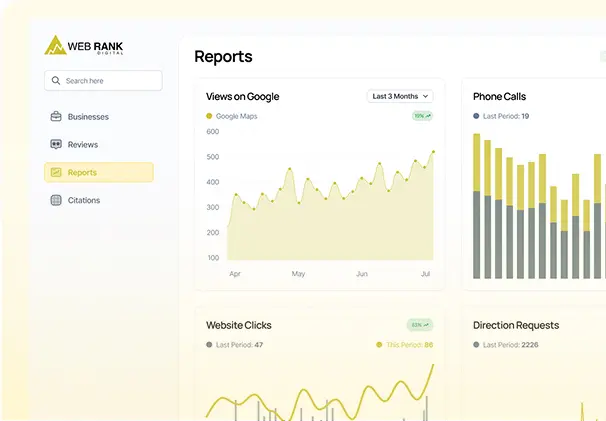
Finding your next customer segment does not have to be guesswork. By combining local market research, search trends, competitive analysis, and a willingness to test, you can uncover groups of customers who are ready to buy. And with the right tools to organize and interpret the data, you can move from a broad idea to a focused plan.
Web Rank Digital is also on LinkedIn.
Web Rank Digital is located at 401 s Graham st, Charlotte, NC 28202, and can be reached at +1 877-726-5871.